What Meat Do Mongolians Eat? Mongolian Meat Guide (2026)
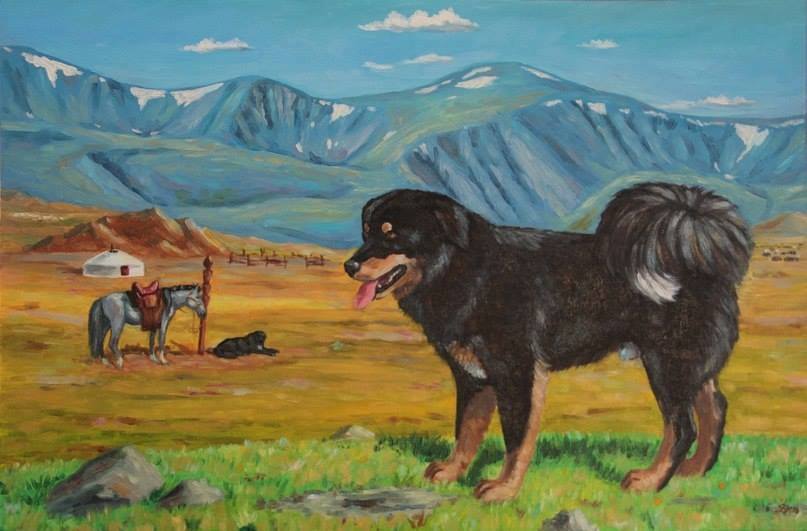
The Mongolian Bankhar is a large livestock guardian dog closely connected with Mongolia's pastoral way of life. For generations, these dogs have lived beside herding families and helped protect sheep, goats, and other livestock on the open steppe. Bankhar dogs are sometimes called “Mongolian Mastiffs,” but that name can be misleading. The Bankhar is more accurately described as a traditional Mongolian livestock-guardian landrace rather than a standardized mastiff breed.
Not exactly.
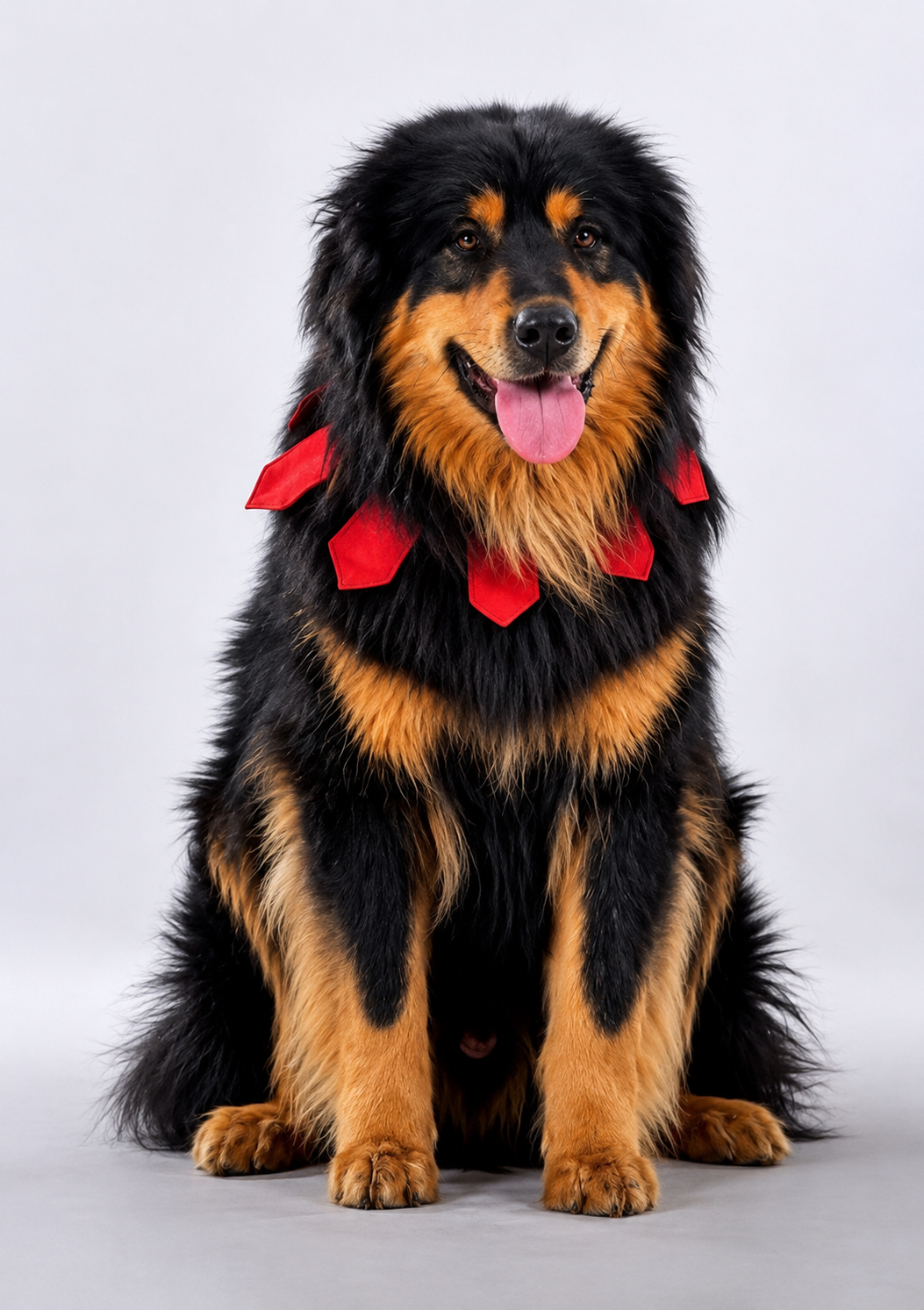
“Mongolian Mastiff” is sometimes used in English to describe the Bankhar because it is a large, powerful dog. However, specialists working with Bankhar dogs describe them as a landrace, not a standardized breed.
A landrace develops over generations within a particular environment and human culture. Instead of being bred mainly to match a fixed appearance, Bankhar dogs developed around the practical needs of Mongolia's pastoral communities.
The Bankhar was first and foremost a livestock guardian.
Mongolian herders move animals through landscapes where predators and livestock can share the same territory. A capable guardian dog can remain near a herd, detect possible threats, bark, establish its presence, and confront a predator if necessary.
This is different from a sheepdog trained to gather or direct animals.
The basic difference is:
This distinction corrects the old article, which describes Bankhars as being bred for both “herding and protecting livestock.”
Bankhar dogs are large and athletic, with a heavy coat suited to Mongolia's demanding climate.
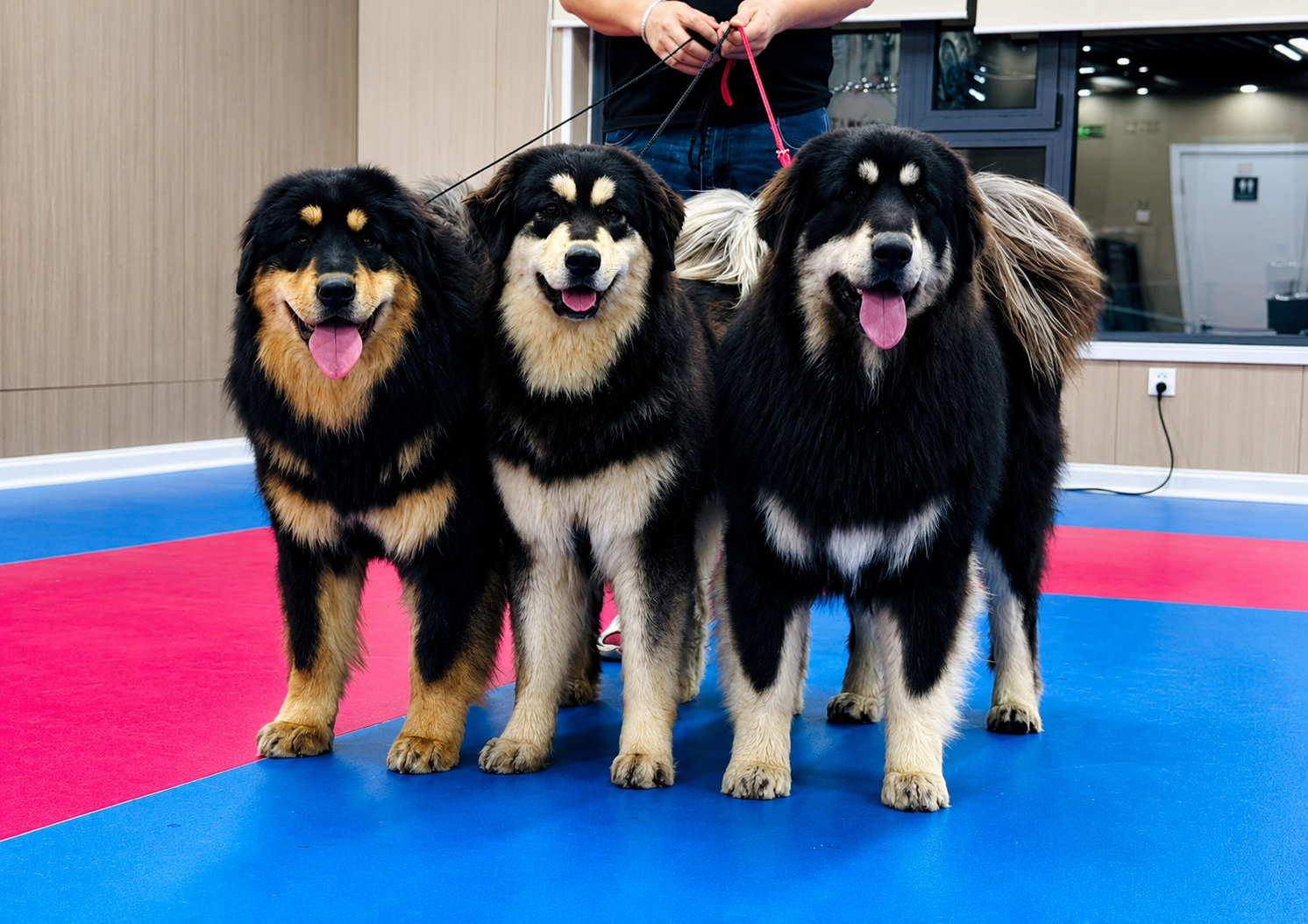
According to the Mongolian Bankhar Dog Project, adult females commonly stand around 66–74 cm at the shoulder, while males are around 71–84 cm. Their recorded working-dog weights vary considerably, with males generally larger than females.
Their winter coat can become particularly thick, with a dense undercoat providing insulation. Because Mongolia covers many different landscapes and climates, coat thickness and appearance can vary between dogs and regions.
One of the most recognizable Bankhar appearances is a dark coat with lighter markings above the eyes.
These spots create the impression that the dog has an extra pair of eyes. The Mongolian Bankhar Dog Project notes that these dogs are traditionally known as “four-eyed” dogs, and Mongolian beliefs sometimes associate the markings with the ability to see into the spirit world.
The markings also have a practical visual effect: they make dark Bankhar dogs easier to distinguish from wolves in low light.
This combination of practical value and traditional belief makes the “four eyes” one of the most interesting characteristics of the Bankhar.
No. Although the two dogs can look similar at first glance, Bankhar and Tibetan Mastiff should not be treated as interchangeable names.
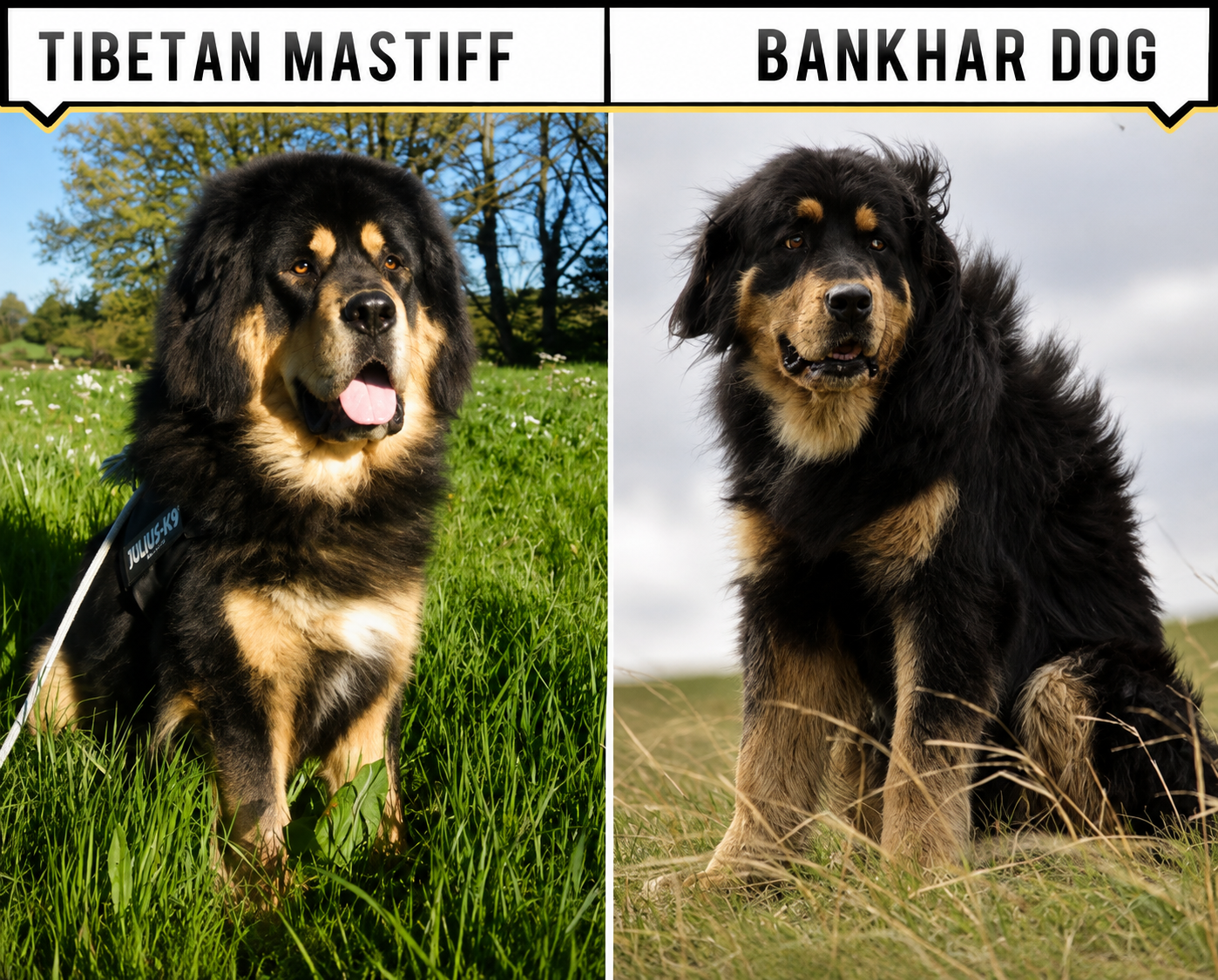
Some important differences include:
The Mongolian Bankhar Dog Project specifically warns that modern Tibetan Mastiff interbreeding can change the working characteristics of Bankhar populations.
Calling every large, fluffy Mongolian dog a Tibetan Mastiff is therefore inaccurate.
A Bankhar's job is to protect livestock, not herd it.
A good livestock guardian dog does not need to fight every predator it encounters.
Much of its protection comes from deterrence.
The dog's barking, scent, movement around the herd, and physical presence can signal that livestock are being guarded. If a predator continues approaching, the dog may confront it.
This matters because preventing an attack is safer for both the livestock and the dog than fighting after a predator has already reached the herd.
Bankhar dogs can confront wolves when necessary, but describing them simply as “wolf-fighting dogs” misses their real purpose.
Their job is to protect livestock, not hunt predators.
The Mongolian Bankhar Dog Project describes Bankhars as independent guardians that normally stay with the animals they protect instead of chasing predators for long distances. If a threat refuses to leave, however, the dog can respond aggressively.
That behavior makes them valuable in landscapes where wolves and herding communities live relatively close to one another.
Indirectly, yes.
Snow leopards and other predators sometimes kill domestic livestock. When herders lose valuable animals, the result can be retaliatory killing of predators.
Livestock guardian dogs offer another approach.
A 2021 peer-reviewed study of livestock guardian dogs in rural Mongolia found that herders experienced a significant reduction in annual livestock losses to predators after receiving guardian dogs. The researchers concluded that livestock guardian dogs could be a useful livestock-protection tool alongside predator conservation.
The Mongolian Bankhar Dog Project now breeds, trains, and places Bankhar dogs with qualified herding families, including families living in landscapes shared with predators such as snow leopards.
This gives an old pastoral tradition a new conservation role.
Traditional working Bankhar populations declined significantly during the 20th century.
The Mongolian Bankhar Dog Project connects this decline partly with major changes to pastoral life during Mongolia's socialist period. Nomadic families were reorganized into collective systems, knowledge about traditional livestock guardian dogs declined, and foreign dog populations increasingly mixed with local dogs.
Today, organizations are working with herders to identify, breed, train, and return suitable working Bankhar dogs to livestock-owning families.
It is better to describe Bankhar as a rare traditional working landrace undergoing restoration efforts than to call it an officially “endangered breed.” Domestic dog landraces do not have the same conservation classification system as endangered wildlife species.
"The Taiga Dog" an ancient sightbound breed native to Central Asia, primarily associated with Kyrgyzstan and Mongolia
You will sometimes see claims that Bankhar dogs are thousands or even tens of thousands of years old.
Those claims should be treated carefully.
The Bankhar clearly has deep roots in Mongolian pastoral culture, but putting an exact age on today's Bankhar population is difficult. Research into the origins of domestic dogs remains complex, and evidence about ancient dog domestication should not automatically be treated as proof that one modern landrace has existed unchanged for the same length of time.
It is safer to say that the Bankhar is a long-established Mongolian landrace shaped over many generations by pastoral life and livestock protection.
Working Bankhar dogs need to make decisions without waiting for constant commands from a person.
For this reason, independence is an important part of their working temperament.
They can form strong relationships with the people and animals they know, but their job also requires them to be suspicious of unfamiliar animals or people approaching livestock without a trusted human present.
That means travelers should not assume that a Bankhar living beside a ger is an ordinary pet that wants to be approached.
For a pastoral household, livestock represents far more than animals standing in a field.
Sheep, goats, cattle, horses, and camels can provide food, income, transportation, wool, cashmere, and security for the family.
A dog capable of protecting those animals therefore performs an important economic role as well as being part of the household.
The Bankhar represents this close relationship between livestock, landscape, wildlife, and the people living on Mongolia's steppe.
One of the most useful things for travelers to know is that livestock guardian dogs may take their job seriously.
The Mongolian Bankhar Dog Project notes a traditional greeting used when approaching a ger: essentially, “Hold your dog!”
The meaning is practical. A visitor is asking the family to control or reassure the guardian dog before the stranger comes closer.
This custom is a reminder that the dog's protective behavior is not necessarily bad behavior. From the Bankhar's point of view, protecting the home and livestock is exactly its job.
Travelers staying with herding families may meet guardian dogs before they meet the people themselves.
Use a few simple precautions:
Once properly introduced, some Bankhar dogs may be calm around visitors. But the safest approach is always to respect them as working livestock guardians first, not tourist attractions.
Discover Mongolia's guides regularly travel through pastoral regions, where understanding small customs like how to approach a herding family's dogs can make encounters with local families safer and more respectful.
The Bankhar connects traditional herding knowledge with a modern conservation problem.
Herders need ways to protect valuable livestock. At the same time, Mongolia is home to predators that are important parts of the country's ecosystems.
Research suggests livestock guardian dogs can reduce livestock losses without relying only on lethal predator control.
That makes the Bankhar more than an impressive-looking dog.
It is a working part of Mongolia's pastoral heritage that may also help people and wild predators share the same landscapes.
What is a Mongolian Bankhar dog?
A Bankhar is a traditional Mongolian livestock guardian dog used to protect herds and flocks. Specialists generally describe Bankhar as a landrace rather than a standardized dog breed.
Is a Bankhar the same as a Mongolian Mastiff?
No, “Mongolian Mastiff” is an informal name sometimes used for Bankhar dogs, but it can be misleading. Bankhar is better described as Mongolia's traditional livestock-guardian landrace.
Is a Bankhar the same as a Tibetan Mastiff?
No, Bankhar and Tibetan Mastiff are not the same. Bankhar dogs have their own working history in Mongolia, and organizations preserving them specifically distinguish Bankhar from modern Tibetan Mastiffs.
What do Bankhar dogs protect livestock from?
Bankhar dogs can help deter predators that threaten livestock, particularly wolves. Modern conservation programs also use livestock guardian dogs in areas where herding families share landscapes with predators such as snow leopards.
Do Bankhar dogs fight wolves?
Yes, a Bankhar may confront a wolf if the predator continues approaching its livestock. However, the dog's main role is deterrence and protection rather than hunting or chasing wolves over long distances.
Are Bankhar dogs friendly with people?
Yes, properly raised Bankhar dogs can form strong relationships with their families and people they know. However, an unfamiliar working dog may be protective around its livestock or home, so travelers should wait for the owner's permission before approaching.
Why do some Bankhar dogs look like they have four eyes?
Dark Bankhar dogs often have lighter markings above their real eyes, creating the appearance of a second pair. Traditional beliefs associate these markings with spiritual sight, which is why they are sometimes called “four-eyed dogs.”
Can tourists see Bankhar dogs in Mongolia?
Yes, travelers visiting rural herding families may encounter working livestock guardian dogs. They should be treated as working animals, and visitors should always wait for the family or guide before approaching or touching them.
Discover Mongolia has organized tailor-made tours since 2004.
We handle flights, accommodation, guides, vehicles — you focus on the journey.